
Integration of Visual Art, Reading, and Math
into Science Instruction
March 22, 2024
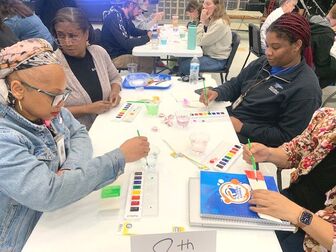
|
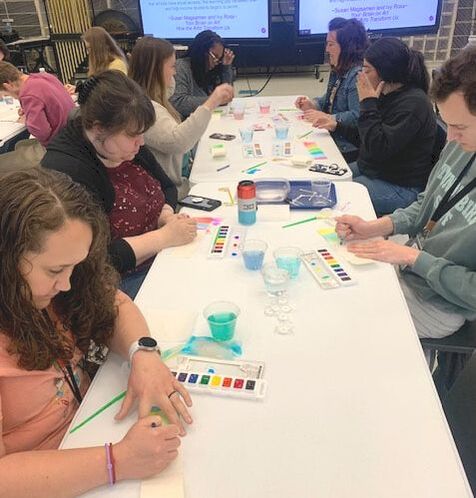
|
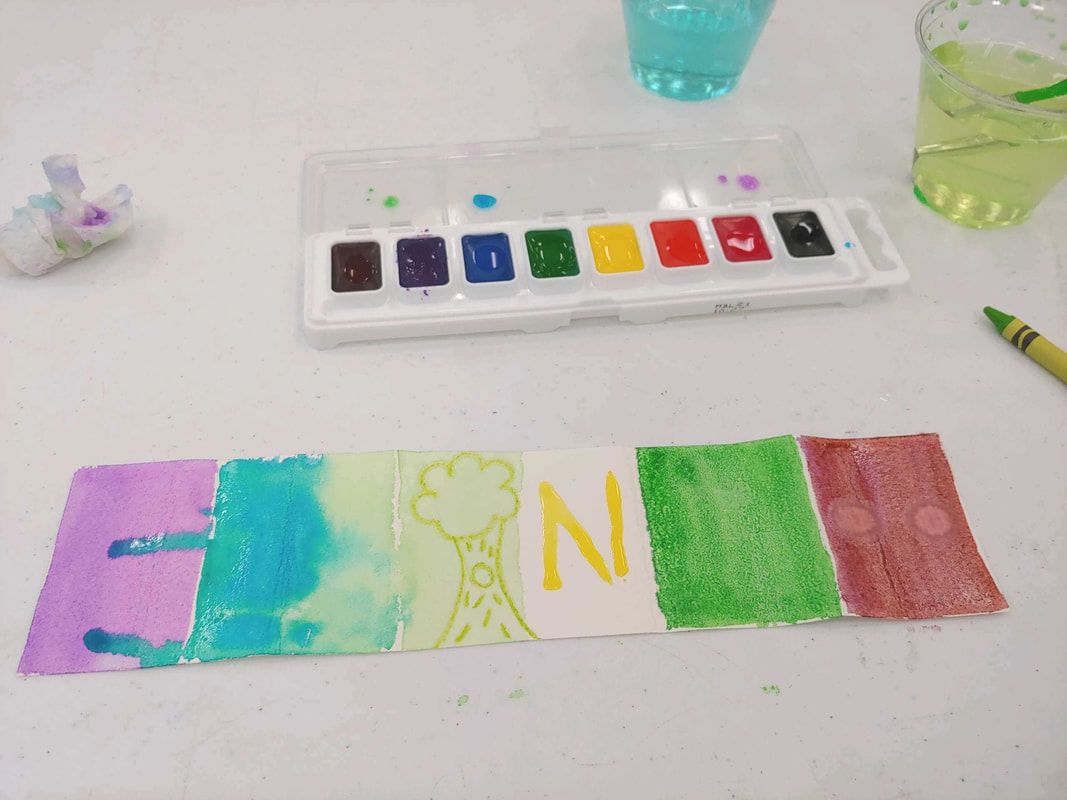
|
Teaching Strategies for Science Instruction
February 15, 2024
Boredom is real! The school day is long and, for students, it's not nearly as much fun as a PS-5! Science class is much longer than their average TikTok video, and after the first 3-sec when they decide it's not for them, oh well, there's still 55-min left! It's important for teachers to develop an arsenal of varied teaching strategies to maintain student attention and engagement.
In addition to a variety of teaching strategies for Science instruction, I recommend the Workshop Model of Lesson Planning. With the Workshop Model, teachers guarantee students 3 different experiences during a class period. Initially, the teacher introduces the concept/lesson/topic with a brief mini-lesson. This can be in the form a discussion, a video, or a demonstration. Next there is either group or individual work that the students complete related to the mini-lesson in order to deepen their knowledge and understanding. Before students leave, the teacher ensures there is time for sharing. During sharing, groups or individuals are given the opportunity to share out what they learned, and the teacher helps everyone to make the connection back to the day's mini-lesson, the standard, and content goals.
In addition to a variety of teaching strategies for Science instruction, I recommend the Workshop Model of Lesson Planning. With the Workshop Model, teachers guarantee students 3 different experiences during a class period. Initially, the teacher introduces the concept/lesson/topic with a brief mini-lesson. This can be in the form a discussion, a video, or a demonstration. Next there is either group or individual work that the students complete related to the mini-lesson in order to deepen their knowledge and understanding. Before students leave, the teacher ensures there is time for sharing. During sharing, groups or individuals are given the opportunity to share out what they learned, and the teacher helps everyone to make the connection back to the day's mini-lesson, the standard, and content goals.
Standards-Based Sample Lesson Plans
that Use the Workshop Model of Instruction
that Use the Workshop Model of Instruction
|
JIGSAW Strategy
6-PS4-2 Develop and use a model to describe that waves are reflected, absorbed or transmitted through various materials. 8-PS4-1 Using mathematical representations, describe a simple model for waves that includes how the amplitude of a wave is related to the energy in a wave. 8-PS4-3 Communicate information to support the claim that digital technologies are used to improve our understanding of how waves transmit information. |
|
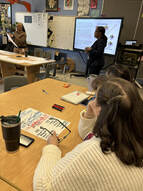
- Mini Lesson: We have been learning about the waves and the electromagnetic spectrum, and today I wanted us to dig a little deeper and try to gain a better understanding of how we use waves (from the spectrum) in our daily lives.
- Group Assignment: LINK Each group (or 2 groups) will have a research question and a website. You will develop a list of bullet points to answer the question in full. You will designate someone from your group to come to the front and share information with the class and accept questions.
- Sharing: Teacher reviews the idea that waves have different wavelengths and frequencies, and those differences cause waves to be able to perform different functions in our everyday lives.
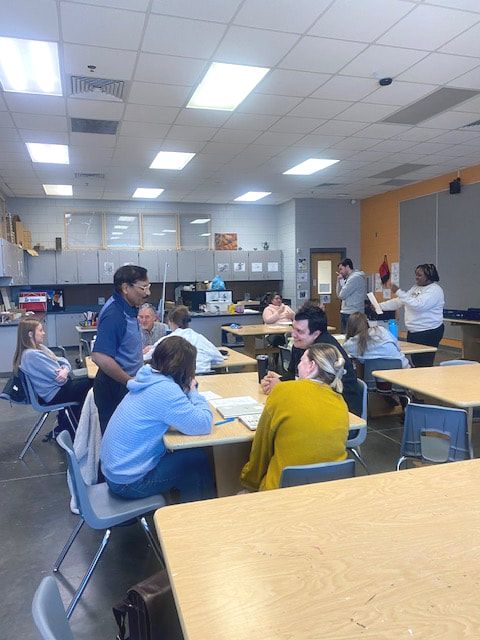
Conver-Stations Strategy
6-LS1-3 Use argument supported by evidence for how the body is a system of interacting subsystems composed of groups of cells.
6-LS1-3 Use argument supported by evidence for how the body is a system of interacting subsystems composed of groups of cells.
|
|
|
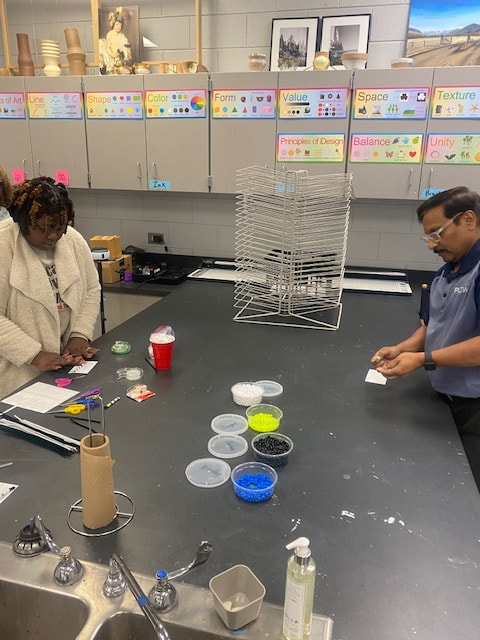
Small Group w/ Hands-On Strategy B-LS1-6 Construct and revise an explanation based on evidence for how carbon, hydrogen, and oxygen from sugar molecules may combine with other elements to form amino acids and other large carbon-based molecules necessary for essential life processes. |
|
- Mini-Lesson: Let’s say that for breakfast, I ate a bowl of cereal and milk, and a KFC chicken wing left over from last night. Let’s see what the nutrition facts look like for my breakfast. (bring props) Is there any protein in the cereal? What about in the chicken? What about carbs? Write those amounts on the board. So, I’ve eaten this yummy breakfast and now I’m off to school/work.
-My body is digesting this food, which means it is breaking down the food into its components. All of what we read in the nutrition facts are being broken down for my body’s use. Let’s see, there were lots of carbohydrates in my breakfast. (Write C6H12O6 on the board)
-There wasn’t just 1 molecule of C6H12O6, there were 39g of it. Let’s say that all breaks down to be this bag of C (black beads), this bag of H (white beads), and this bag of O (red beads). From the chicken, we had lots of protein, so there’s C,H, O and some N. (hold up the bags of beads, each color coded).
-One of the things my body has to do is make proteins, in fact, each cell must make proteins based on the instructions in their DNA. But, what does the body need in order to make proteins? They need the components to make amino acids. Aka nutrients or elements. They must first make amino acids. - Group Assignment:
-With your partner, you are going to build 2 amino acids using beads and a pipe cleaner.
-Write the name of the amino acid, sketch the structure from this link, write the chemical formula. You may build it as a straight chain or attempt to build it from the structural formula.
-On a card, write the name, chemical formula, draw the structural formula, and 5 fun facts about the amino acid. Use Google.
-Here are two questions to discuss in your group: 1) From where do all of the C, H, O, and come to make these 20 different amino acids? 2) Why must our body/cells make proteins when we can eat protein?
- Sharing: Discuss the answers to the two questions (above) each group was to discuss above. Show the models and ensure that each person understands the standard.
|
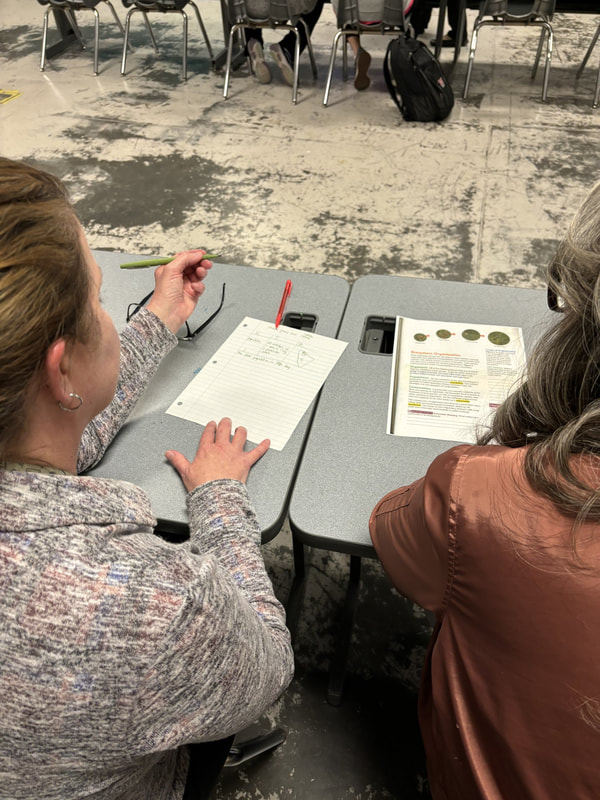
K.I.M.S. Strategy
7-LS2-1. Analyze and interpret data to provide evidence for the effects of resource availability on organisms and populations of organisms in an ecosystem. B-LS2-1. Use mathematical and/or computational representations to support explanations of biotic and abiotic factors that affect carrying capacity of ecosystems at different scales.
|
|
